Beyond the Buzz Unlocking Peak Performance with Next-Gen Motor Test Systems 🔧⚡️
The world hums with motion. From the whisper-quiet glide of an electric vehicle 🚗 to the relentless churn of industrial machinery 🏭, electric motors are the unassuming titans powering our modern existence. Yet, for all their ubiquity, ensuring these workhorses deliver reliable, efficient, and peak performance remains a complex, often hidden challenge. That's where the unsung hero steps in: the Motor Performance Test System. Forget clunky, outdated rigs offering fragmented glimpses; the future is intelligent, integrated, and indispensable. This isn't just about ticking boxes; it's about **engineering confidence, optimizing potential, and building a foundation for innovation you can literally feel.** Imagine this: You’ve poured resources into designing a revolutionary new motor. Prototypes look perfect on paper 📄. The CAD models gleam. But how do you *know* it will deliver the promised torque under real-world load fluctuations? How confident are you about its efficiency curve after 10,000 hours of operation? How can you guarantee it won't overheat in that compact, sealed enclosure in the scorching desert sun? **Gut feeling and theoretical calculations simply don’t cut it anymore.** The stakes are too high – warranty claims, brand reputation, operational downtime, and sheer competitive edge hang in the balance. This is the critical juncture where a sophisticated motor test system transforms uncertainty into actionable intelligence. **Why Yesterday's Testing Leaves You in the Dust ⏳** For decades, motor testing was often a disjointed affair. Think of technicians wrestling with separate power analyzers, oscilloscopes, dynamometers, and temperature loggers, desperately trying to synchronize data streams that never quite lined up. Manual data entry? Prone to errors. Limited test scenarios? A reality. Slow reporting? Frustratingly common. This fragmented approach meant: * **Incomplete Picture:** Capturing only snapshots of performance, missing crucial interactions between torque, speed, power, efficiency, temperature, vibration, and electrical characteristics under dynamic conditions. 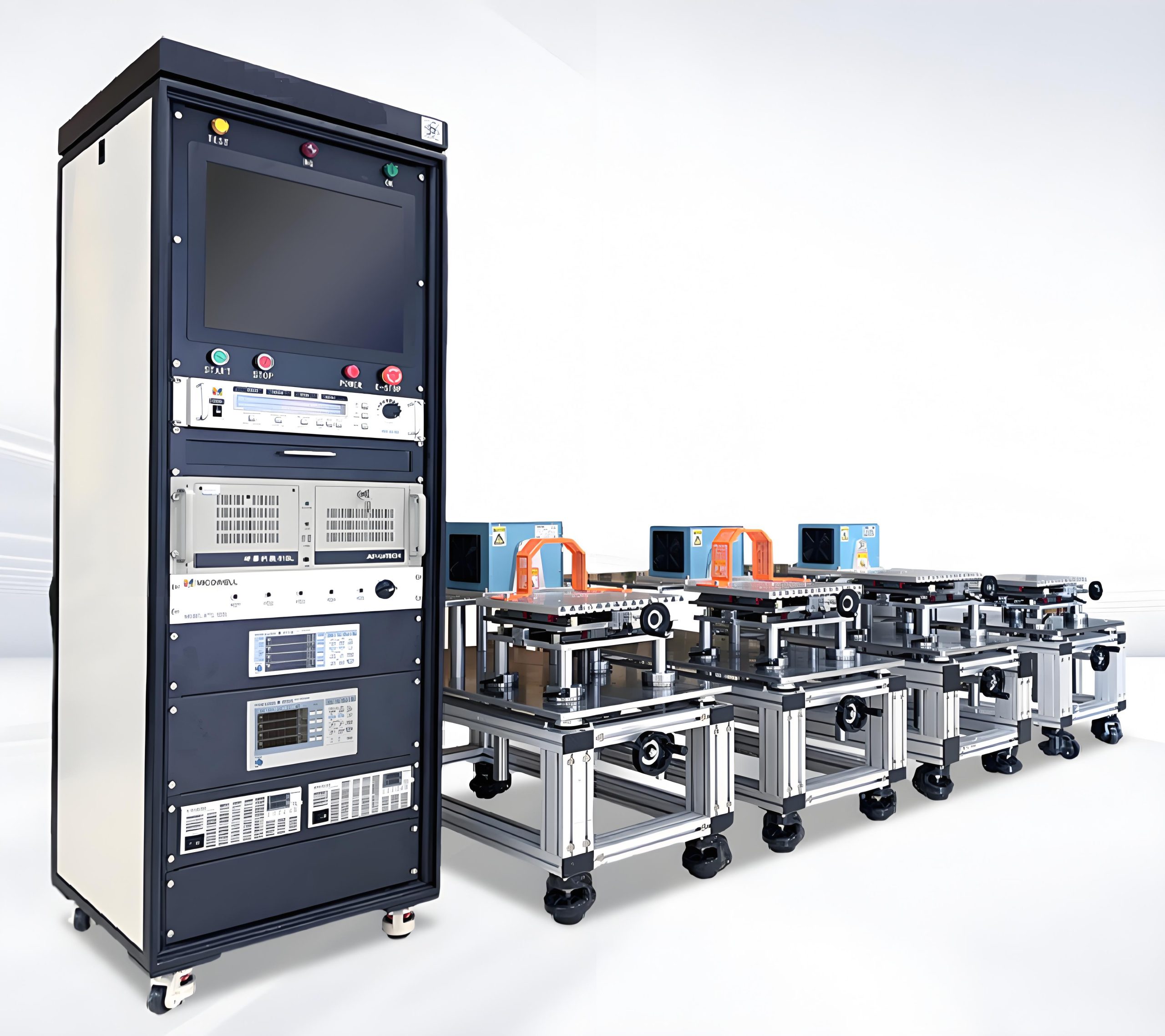 * **Time Sink:** Lengthy setup times, slow test execution, and laborious data analysis ate into development cycles and time-to-market. * **Hidden Costs:** Inefficient motors slipping through the net, leading to higher energy bills 🏭💸 and premature failures causing costly downtime. * **Innovation Bottleneck:** Lack of deep, correlated data stifled design improvements and the confidence to push performance boundaries. * **Scalability Nightmare:** Adapting the test setup for new motor types or evolving standards was a major undertaking. **The Revolution is Here: Integrated Intelligence Meets Uncompromising Precision 🧠🔍** Modern Motor Performance Test Systems are a quantum leap forward. They are not just collections of instruments; they are cohesive, software-driven platforms designed from the ground up to understand the intricate dance of forces within an electric motor. Think of it as an MRI or CT scan for your motor – providing deep, non-invasive, real-time diagnostics of its very soul. Here’s what sets the new generation apart: 1. **Seamless Data Fusion:** ✅ Gone are the days of mismatched instruments. A true integrated system brings together high-precision torque/speed measurement (via dynamometer), multi-channel high-bandwidth power analysis (voltage, current, power, harmonics, power factor), temperature mapping (multiple sensors), vibration analysis, and even environmental control (temperature, humidity chambers) into a single, synchronized data stream. Every parameter is measured simultaneously, down to the microsecond, revealing the *true* cause-and-effect relationships impossible to see otherwise. Is that efficiency dip caused by core losses, winding resistance heating, or bearing friction? Now you *know*.
 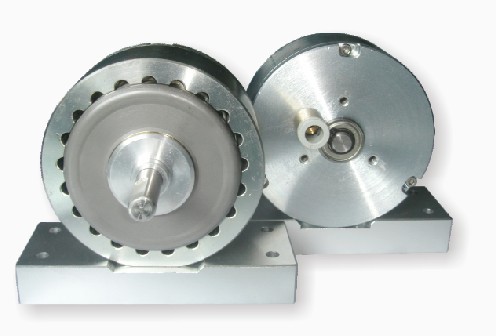 2. **Dynamic \u0026 Real-World Simulation:** 🌪️ Static load points tell only part of the story. Modern systems excel at applying complex, programmable load profiles that mimic actual operating conditions: * Simulating the brutal stop-start cycles of an urban delivery vehicle. * Replicating the sudden torque demands of a robotic arm lifting a heavy payload. * Mimicking the variable flow resistance on a pump or fan. * Testing resilience against voltage sags, surges, and harmonics present on real-world power grids. This ability to \“drive\” the motor through its real-life paces *in the lab* is invaluable for uncovering weaknesses and validating durability long before deployment. 3. **Automation \u0026 Speed:** 🤖💨 Repetitive test sequences are fully automated. Define your test profile – speed sweeps, torque steps, endurance cycles, mapping routines – hit start, and let the system work tirelessly, 24/7 if needed. This drastically reduces test time per motor, accelerates development iterations, and frees up your skilled engineers for analysis and innovation, not babysitting equipment. Batch testing for quality control becomes efficient and consistent. 4. **Intelligent Analysis \u0026 Insight Generation:** 📊➡️💡 Raw data is useless without insight. Advanced software goes beyond simple graphing: * **Automatic Efficiency Mapping:** Generating comprehensive efficiency contour maps (η = f(n, T)) across the entire operating range, crucial for identifying sweet spots and losses. * **Loss Separation:** Quantifying copper losses, iron losses, friction \u0026 windage losses – providing direct feedback for design optimization. * **Performance Benchmarking:** Easily comparing multiple designs or units against specifications or previous iterations. * **Predictive Analytics:** Identifying subtle trends in vibration or temperature that might indicate impending bearing wear or insulation degradation. * **Compliance Reporting:** Automatically generating standardized test reports (e.g., IEEE 112, IEC 60034-2-1, NEMA MG-1) with a few clicks, saving countless hours. 5. **Scalability \u0026 Flexibility:** 🔄 Modular platforms adapt as your needs evolve. Need to test a tiny drone motor today and a massive traction motor tomorrow? Need to integrate a custom environmental chamber or add specialized sensors? A well-designed system scales effortlessly, protecting your investment long-term. Support for AC, DC, BLDC, and various drive types is fundamental. **Where Precision Testing Drives Tangible Value 🚀** The impact of deploying a sophisticated motor test system resonates across your entire operation: * **R\u0026D \u0026 Design:** * **Accelerated Development Cycles:** Rapid iteration based on concrete data slashes time-to-market. * **Optimized Performance:** Pinpoint losses and bottlenecks to push efficiency boundaries, leading to better-performing, more competitive products. Achieve that coveted IE5 efficiency class. * **Enhanced Reliability:** Identify failure modes early through rigorous dynamic and endurance testing. hysteresis brake that last. * **Reduced Prototyping Costs:** Virtual validation is powerful, but *physical* validation with precise data is irreplaceable. Catch flaws before mass production. * **Innovation Enabler:** Confidence in test data empowers engineers to explore radical new designs and materials. * **Manufacturing \u0026 Quality Control:** * **100% End-of-Line Testing:** Ensure every motor leaving the factory meets exact performance specifications. No more sampling risks. * **Reduced Warranty Claims \u0026 Returns:** Catch defective units or performance drift before they reach the customer, protecting your bottom line and reputation. * **Process Control \u0026 Improvement:** Correlate test results with production data (e.g., winding tension, magnetization) to fine-tune manufacturing processes. * **Supplier Validation:** Objectively verify the performance of incoming motors or components from suppliers. * **Validation \u0026 Certification:** * **Streamlined Compliance:** Easily generate the precise data required for international efficiency standards (IEC, NEMA, DOE) and safety certifications (UL, CE). Avoid costly re-testing. * **Independent Verification:** Provide irrefutable proof of performance claims to customers, regulators, and stakeholders. * **Maintenance \u0026 Diagnostics:**
 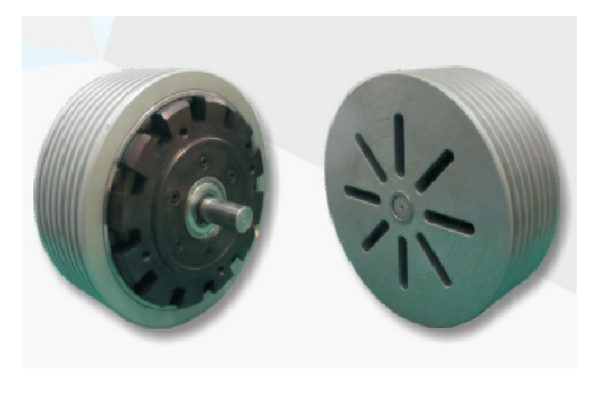 * **Predictive Maintenance:** Use test data trends to forecast motor health and schedule maintenance proactively, avoiding catastrophic failures and downtime. * **Troubleshooting:** Accurately diagnose field failures by comparing performance to baseline test data. **Beyond the Lab Bench: Real-World Applications Igniting 🔥** This technology isn't confined to motor manufacturers. Its reach is vast: * **Electric Vehicles \u0026 Aerospace:** Testing traction motors, range extenders, actuators, and flight control motors under extreme conditions for maximum efficiency, power density, and safety. Simulating regenerative braking profiles is critical. ✈️🔋 * **Industrial Automation:** Validating servo motors, spindle motors, and robotic actuators for precision, responsiveness, and reliability in demanding manufacturing environments. 🤖 * **HVAC \u0026 Appliances:** Optimizing compressor motors, fan motors, and pump motors for energy efficiency and quiet operation – crucial for meeting regulations and consumer expectations. ❄️ * **Renewable Energy:** Testing generators (wind turbines) and critical motors in solar tracking systems and hydropower installations for durability and grid compatibility. 🌞💨 * **Consumer Electronics:** Ensuring the performance and acoustic signature of motors in everything from power tools to laptops and smartphones. 📱 * **Medical Technology:** Validating the precise torque and reliability of motors in surgical robots, infusion pumps, and diagnostic equipment where failure is not an option. ⚕️ **Choosing Your Powerhouse Partner: Key Considerations 🤔** Investing in a motor test system is significant. Look beyond the spec sheet and consider: * **Accuracy \u0026 Traceability:** Primary torque standards? Calibration traceability? This is the bedrock of trust in your data. * **Dynamic Response:** Can the dynamometer truly handle the torque ripple and rapid transients of your motors? Bandwidth matters immensely. * **Power Analysis Capability:** High bandwidth, wide current/voltage ranges, accuracy across the entire power factor spectrum, harmonic analysis. Don't settle for basic metering. * **Software Usability \u0026 Power:** Is the interface intuitive? Does it offer the deep analysis tools you need without complex scripting? Can it automate your specific test sequences? * **System Integration \u0026 Support:** Look for a true partner, not just a vendor. Do they offer comprehensive support, training, calibration services, and system integration expertise? Can the platform grow with you? * **Safety:** Robust mechanical design, interlocks, and electrical safety are non-negotiable. **The Bottom Line: Performance Isn't Accidental, It's Measured 🎯** In an era defined by electrification, efficiency mandates, and relentless competition, leaving motor performance to chance is a gamble you simply cannot afford. The modern Motor Performance Test System is no longer a luxury; it’s the fundamental toolset for engineering excellence. It transforms abstract design goals into quantifiable, verifiable reality. It replaces costly field failures with predictable reliability. It turns energy guzzlers into models of efficiency. It shortens development cycles and accelerates innovation. It empowers you to move beyond simply *hoping* your motor performs, to *knowing* it will excel, under any condition, every single time. It’s the silent partner ensuring the motors that power our world do so reliably, efficiently, and at the peak of their potential. Stop guessing. Start measuring. Start mastering motion. The precision to perfect performance is within your grasp. 🔧⚡️🏆